Use embryos frozen from a previous IVF cycle for another chance at pregnancy — without repeating the full stimulation process. Gentler, lower-cost, highly successful.
A Frozen Embryo Transfer — or FET — uses embryos that were frozen following a previous IVF cycle. When a stimulated cycle produces more good-quality embryos than are transferred in the first attempt, the remaining embryos are vitrified (flash-frozen) and stored. These can then be used in a subsequent cycle, giving patients another opportunity at pregnancy without repeating the full stimulation process.
FET cycles are significantly less intensive than a full IVF cycle — there are no injections for ovarian stimulation, no egg retrieval, and no anaesthesia. Instead, the focus is on preparing the uterine lining to receive the embryo and timing the transfer carefully.
Advances in vitrification — the modern method of freezing embryos — have made FET one of the most successful procedures in fertility medicine. Survival rates for thawed embryos now exceed 95% with modern vitrification, and pregnancy rates from FET are in many cases comparable to, or higher than, fresh embryo transfer.

The lining of the uterus (endometrium) is prepared using either natural cycle monitoring or a short course of oestrogen medication, depending on your doctor's assessment.
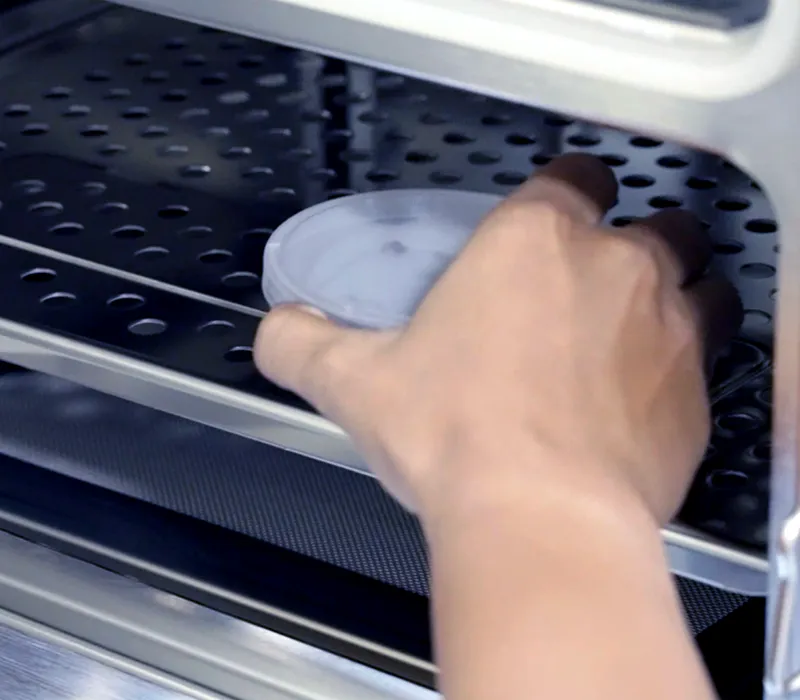
On the day of transfer, the frozen embryo is carefully thawed in our on-site lab. Our embryologist confirms the embryo has survived the thaw and assesses its quality.
The embryo is transferred to the uterus in a straightforward procedure — similar to a smear test, and usually painless.
Progesterone medication is prescribed to support the uterine lining in the days following transfer.
A blood test approximately 12–14 days after transfer confirms whether the cycle was successful.
Vani, our resident senior embryologist, performs all embryo thawing personally. The thawing process is as technically demanding as any step in IVF, and having a dedicated on-site embryologist — rather than someone brought in for the procedure — ensures the highest standard of care for your embryos at this critical moment.
Embryos can be stored for many years — storage periods of 5–10 years are common, and longer storage with maintained quality has been documented. Indian regulations and our clinic protocols will be discussed at your consultation. Your embryos remain in our secure, monitored storage until you are ready to use them.
FET is one of the most straightforward procedures in fertility treatment. The transfer itself is usually painless and takes only a few minutes. Some patients experience mild cramping similar to period pain on the day. There is no anaesthesia required.
Success rates depend on embryo quality, age at the time of freezing, and individual uterine factors. Modern vitrification has significantly improved FET outcomes, and in some patient groups, pregnancy rates from FET now match or exceed those from fresh transfer. Your doctor will give you a specific estimate based on your embryo grading.
A FET cycle costs significantly less than a full IVF cycle because there is no stimulation phase and no egg retrieval. We will provide a full cost breakdown for your specific plan before you commit.
With modern vitrification, embryo survival rates exceed 95%. However, in the rare event that an embryo does not survive thawing, your doctor will discuss the available options — including a further FET if additional embryos are stored, or planning a new stimulation cycle. We will always be honest with you about the outcome as soon as we know.
Your first consultation at White Stork IVF is completely free. No referral needed. No commitment. Speak with our team in Dona Paula, Goa.