
PGT

Preimplantation Genetic Testing (PGT) in Goa.

Screen embryos for chromosomal or genetic conditions before transfer — improving the chance of a healthy pregnancy and reducing the risk of miscarriage.

Book a free consultation

Preimplantation Genetic Testing — PGT — is a technique that allows embryos created through IVF to be tested for genetic or chromosomal abnormalities before they are transferred to the uterus. By transferring only embryos with the best genetic profile, PGT aims to improve the chance of a successful pregnancy and reduce the risk of miscarriage.

PGT is performed on Day 5 or 6 of embryo development, when the embryo has reached the blastocyst stage. A few cells are biopsied from the outer layer (trophectoderm) of the blastocyst — the part that will develop into the placenta, not the embryo itself. These cells are sent for analysis, and the embryo is frozen while results are awaited.

There are two principal types of PGT: PGT-A tests for chromosomal aneuploidy (too many or too few chromosomes), and PGT-M tests for a specific known genetic condition that one or both parents carry. Understanding which test is relevant to you is the first step in discussing whether PGT is appropriate.

Types of PGT

Two tests, two purposes.

PGT-A — for Aneuploidies

PGT-A screens all 23 pairs of chromosomes in the embryo for numerical abnormalities. Chromosomally abnormal embryos are the most common cause of IVF failure and early miscarriage, and their incidence increases significantly with age. PGT-A identifies which embryos are chromosomally normal (euploid) so that the best candidates for transfer can be selected.

PGT-M — for Monogenic Disorders

PGT-M tests embryos for a specific genetic condition that one or both parents are known to carry — for example, sickle cell anaemia, thalassaemia, cystic fibrosis, BRCA mutations, or Huntington’s disease. This test is designed around the specific mutation in your family and requires detailed preparation before an IVF cycle begins.

The Process

How PGT works.

STEP 1

IVF stimulation and egg retrieval

PGT is performed within a standard IVF cycle. Eggs are retrieved following ovarian stimulation.

STEP 2

Fertilisation and embryo culture

Eggs are fertilised and embryos are cultured to the blastocyst stage (Day 5 or 6).

STEP 3

Embryo biopsy

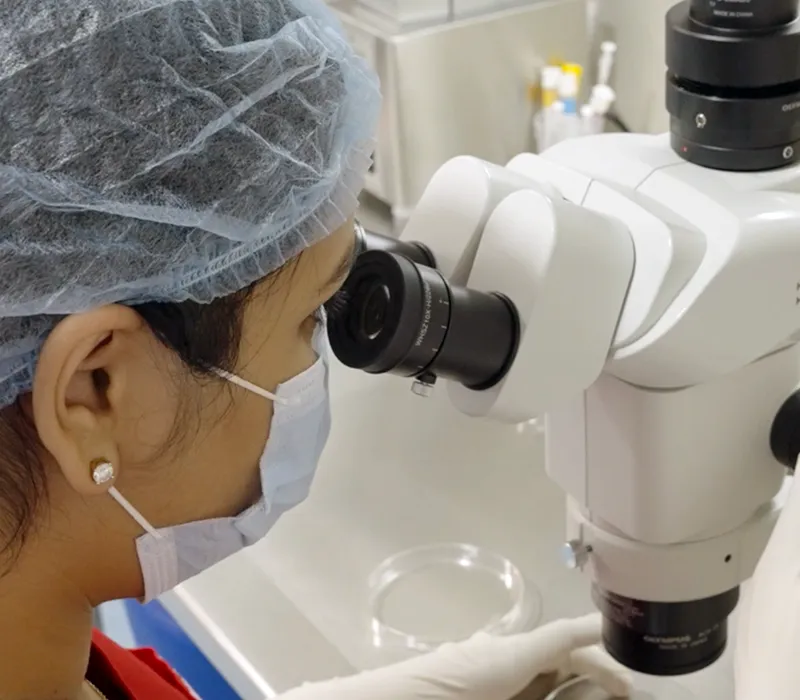
A tiny number of cells (4–8) are carefully removed from the trophectoderm of each blastocyst by our embryologist and sent to a specialist genetics laboratory.

STEP 4

Embryo vitrification

All biopsied embryos are frozen while genetic results are awaited — typically 1–2 weeks.

STEP 5

Results and selection

When results are received, your doctor discusses which embryos are suitable for transfer based on the genetic findings.

STEP 6

Frozen Embryo Transfer

A chromosomally normal (or unaffected, in the case of PGT-M) embryo is transferred in a subsequent FET cycle.

Who it’s for

Who should consider PGT?

  • Women of advanced maternal age (35+), for whom the incidence of chromosomal abnormality in embryos is significantly higher.
  • Couples with a history of recurrent miscarriage, where chromosomal abnormality in embryos is often a contributing cause.
  • Those who have experienced repeated IVF failure despite good-quality embryos.
  • Couples who are known carriers of a genetic condition (e.g., thalassaemia, sickle cell, BRCA) and wish to avoid passing it to their child.
  • Those who have had a previous pregnancy with a chromosomal condition (e.g., Down syndrome, Turner syndrome).
  • Individuals with known chromosomal structural abnormalities (translocations).
At White Stork IVF

PGT is a powerful tool, but it is not the right choice for every patient. It adds cost and time to an IVF cycle, and it requires a Frozen Embryo Transfer rather than a fresh transfer. Your doctor will discuss whether PGT is likely to genuinely improve your outcome or whether your resources are better directed elsewhere. We give you our honest opinion, not the most profitable recommendation.

Questions

Frequently asked questions.

Does PGT-A improve IVF success rates?

PGT-A is most clearly beneficial for women over 37, those with recurrent miscarriage, and those with repeated IVF failure. In these groups, transferring a confirmed chromosomally normal embryo reduces the risk of a failed transfer or early pregnancy loss. In younger patients with a good prognosis, the benefit is less certain. Your doctor will discuss whether it is likely to improve your specific outcome.

Can PGT damage the embryo?

Embryo biopsy is a technically demanding procedure performed by an experienced embryologist. When performed correctly at the blastocyst stage, the risk of damage to the embryo is low — the cells removed are from the trophectoderm (future placenta), not the inner cell mass. In experienced hands, biopsy has no documented effect on the health of children born from biopsied embryos.

What happens if all my embryos test abnormal?

This is a difficult outcome but not an uncommon one, particularly in older patients or those with a high rate of chromosomal abnormality. If no normal embryos are available for transfer, your doctor will discuss the options — including a further IVF cycle, the use of donor eggs, or other pathways. We prepare you for this possibility before you start the cycle so you are not unprepared if it happens.

How long does it take to get PGT results?

PGT results typically take 10–14 days from the date of biopsy. During this time, your embryos are safely frozen. The transfer is planned once results are confirmed.

Is PGT the same as prenatal testing such as amniocentesis?

No. PGT tests embryos before they are transferred to the uterus — before pregnancy begins. Amniocentesis and chorionic villus sampling (CVS) are tests performed during an established pregnancy to assess the foetus. PGT and prenatal testing serve different purposes and are not interchangeable. Some patients who conceive through IVF with PGT still choose to undergo additional prenatal testing — this is a personal decision to discuss with your obstetrician.

Ready to take the next step?

Your first consultation at White Stork IVF is completely free. No referral needed. No commitment. Speak with our team in Dona Paula, Goa.

+91 99719 13399
Dona Paula, Goa
Free first consultation
WhatsApp Call